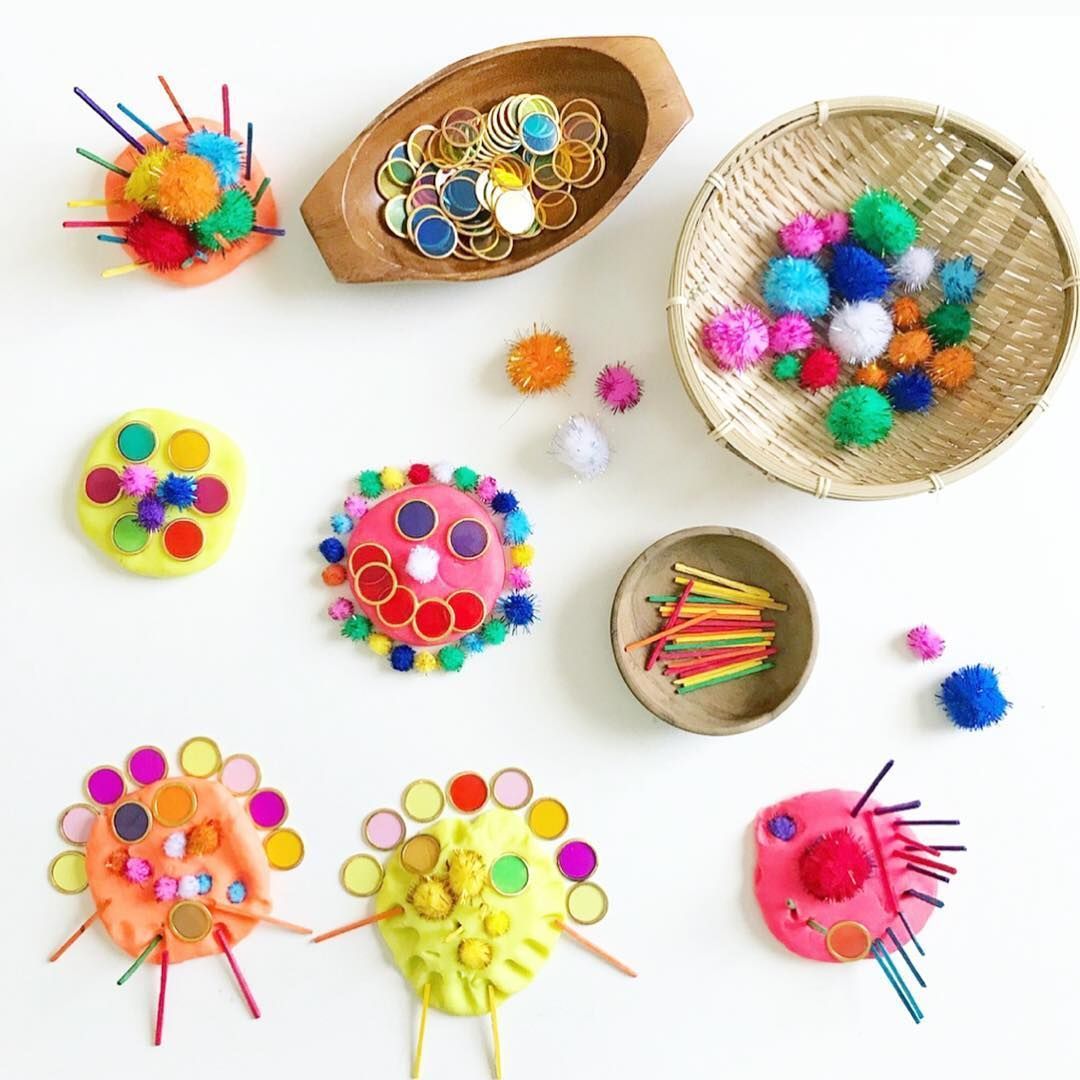
If giving the opportunity to conduct a research study about any topic in the early childhood field I would choose to research the benefits of play and academic learning based programs. I would like to know which program is more beneficial to children, which one they thrive in more, and what are the outcomes of each from an academic standpoint. I would also like to know why parents chose either. I chose this topic because there is a 4 year old boy that goes to the preschool where I work and he is very smart, he can read and write well, etc but he doesn’t follow directions well and seems to wonder away from the group often. I have seen numerous children like this, and their parents seemed to be more focused on academics rather than their developmental progress.
My Personal Research Journey
Which training method has the best outcome on staff effectiveness is the topic for the my research simulation. I chose this topic because I have seen what the lack of training does and how the different types of training methods give different results. For example the staff at the center I work at now uses an online training resource for training. It consist of a pretest, information given by the presenter and/or reading, and a post test. From what I have seen the staff takes the pretest, click through the presentation, and take the post test. They do this because the pretest and post test are pretty much the same. Nothing has been gained from this type of training. I feel this form of training isn’t effective if it isn’t utilized properly.
With just two weeks of this class I am learning to thoroughly analyze information. Not just grouping it using the typical primary or secondary source aspect. This week’s chart gave me an idea on how I can sort the information I am learning in a clear and concise way, where it is easier to refer back to.
If there is any on that has any tips or anything that may help me excel in this course, please share them me. I think this is a course I may have trouble with.
Professional Goals, Hopes, and Dreams
The lack of affordable quality care is an issue in my area. The quality programs are expensive and the inexpensive ones offer the bare minimum.
Professional development is a requirement where I work because it is requirement from the state to complete 24 hours annually. The staff can pick whatever training they want. I feel this isn’t good for staff development because evaluations or classroom observations are done. If none of this isn’t done it’s hard to create training plans for staff to know what areas they need to work on.
Social equity as it relates to my professional goals is teaching early childhood professionals what it is and what it looks like.
My professional hopes and dreams are becoming an ECE trainer and opening a few daycares. My professional challenges are trying to do too much based on trying to feel voids that I see in this industry.
Move to Action
My chosen organization is National Association of Early Childhood Teachers Association,
website https://naecte.org/. This week I examined the Speak Out – Move to Action Position
Statement of June 2020. This move to action position is about the issues minority people are
facing today but what gain my attention was their comment about developing teachers in this area to better serve children and their families. The statement read as followed, “We believe we must develop teachers’ abilities to mastery with culturally infusive perspectives in practice ensuring that our approaches and activities support the children and each child’s family within the community, cultural, and custom context; advance equity through integrated curriculum that promotes world perspective as unique and valued; provide racially and culturally diverse field experience contexts where learning, education, teaching approaches, responsiveness, and guidance are different in value and application from one’s own upbringing; foster community building to break down any racial, gender, or socioeconomic bias in learning ability, critical thinking, or socialization that could hamper the ability of the teacher to positively influence children’s social, emotional, and academic realization in culturally responsive ways. We know our beliefs can lead us to actions.”
With the issue of racism going on in the world today I felt this was something to share. As it
states the importance of developing teachers in this area so they can learn about this subject
but also teach children the difference about each other and being able to include this in the
everyday class room environment.
Poverty Podcast
The podcast I chose this week is “Supporting Young Children and Families Living in Poverty” presented by himama, found at the following link https://blog.himama.com/preschool-podcast-kenya-wolff/ This podcast is about supporting and advocating for children and families in poverty. In this podcast Kenya Wolff, an assistant Professor of Early-Childhood Education at the University of Mississippi talks about rural poverty in Mississippi. She gave ways we as early childhood educators can advocate systematic change; she discussed some misconceptions of poverty and the affects it has on children developments. This podcast discusses what we went over in class this week and it also lets us know that poverty is an issue every state faces and it’s a challenge to deal with. Kenya stated she had a special issue in Dimensions of Early-childhood that shares more information about poverty. I’m going to see can I find it and possibly share somethings.
NAECTE
For my resource this week I looked into the journal they offer. The name of it is Journal of Early Childhood Teacher Education which it was renamed this in 1990. It had to previous names National Association of Early Childhood Teacher Bulletin (1981-1989) and Association for Early Childhood Teacher Educators Bulletin (1979-1980) and I have not ever heard of anyone of them. To gain complete access to the journal you have to purchase a membership. I’m pretty sure the journal has articles about demographics and diversity.
Expanding Horizons and Resources
Horizons
When looking for a podcast I wanted to find one that addressed the issues faced in early childhood education per our assignment and I came across “The Early Education Show” at www.theearlyeducationshow.com. The podcast I listen to was “What the history of childhood advocacy tells us about today?”, this podcast talked about how childhood education was redefined into much more than just providing services for parents to work. Though this podcast was a bit boring it was informative. Listening to podcast is a challenge for me because I prefer to read.
Resources
I chose the National Education of Early Childhood Teachers Educators because I never heard of this organization and I felt as if this was one that I could learn new things from being that it is new to me. I look forward to sharing my new knowledge.
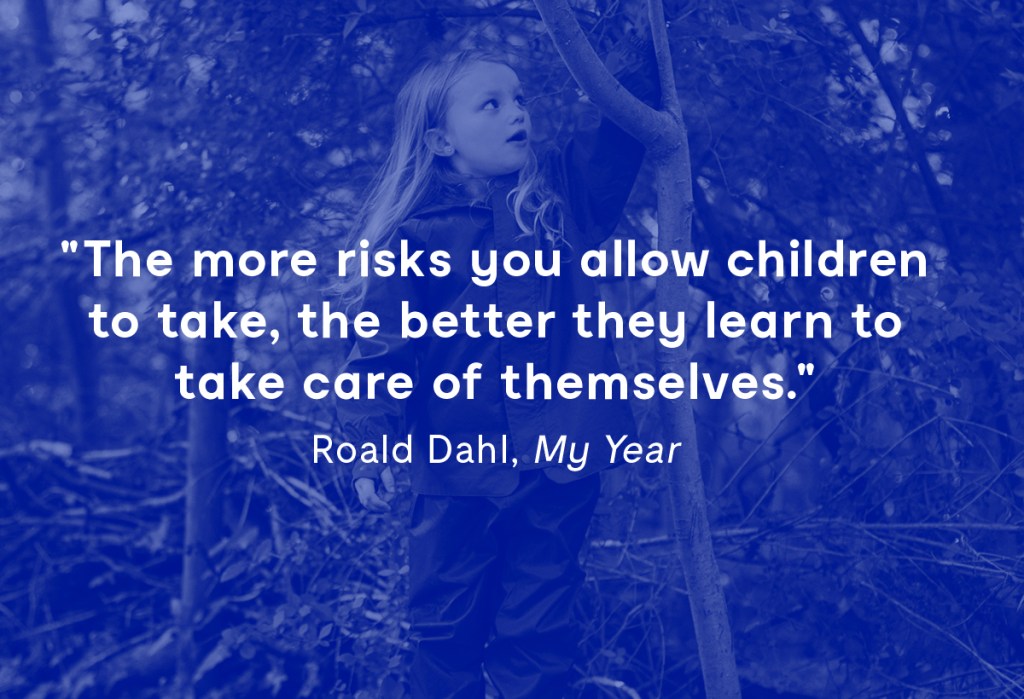
A Quote
TESTING FOR INTELLIGENCE
In early learning I feel that a child’s developmental milestones should be the only thing assessed. That is to see if a child is developing within the giving time frame but also take into consideration that children do develop differently. As for older children I feel they should be assessed when they are struggling with something. This should be done only as a measure to see what a type of accommodations and/or aids a child needs to be successfully. At times children are evaluated when the have behavioral problems but sometimes these behavioral problems stem from not being able to lean.
Testing for Intelligence in Other Parts of the World
Finland Student Assessment
“Classroom assessment are divided into two categories: assessment during the course and final assessment. Both are nationally mandated to align with national criteria, but they serve different purposes. Formative assessment within the classroom encourages student growth and self-assessment. The national curriculum specifies the criteria for classroom assessment during the course, and it is the teacher’s responsibility to carry out assessment of students’ conduct and schoolwork along this national criterion. Yearly assessment, based on a variety of student work, provides feedback to students about progress in learning and Mid-Western Educational Researcher • Volume 25, Issues 1/2 36 suggestions for improvement. The high-stakes final assessment of basic education, contained in the National Curriculum, requires student work samples from 2 years and is conducted by the subject teacher. A final type of assessment that is not included in the National Curriculum is the matriculation examination, the only high stakes standardized test taken by students. The matriculation examination is administered upon completion of upper secondary school if the student intends to complete further education. In sum, Finland’s assessment practices result in fewer formal assessments and fewer pressures for teachers merely to prepare students for a narrow examination.” (HENDRICKSON, 2011)
After assessments struggling children aren’t placed in different classrooms based on their ability but are in same classrooms and an additional teacher is present to help them where they’re struggling.
My Concerns
My concerns with evaluating children is sometimes the first choice. I feel every option should be exhausted before making the decision to assess a child.
References
Hendrickson, Kate, Assessment in Finland: A Scholarly Reflection on One Country’s
Use of Formative, Summative, and Evaluative Practices
Childhood Stressor Poverty
Growing up one of my best friends family didn’t have a lot. My mom would gather all my old clothes and shoes and give them to her being that she was a couple years younger than me. Her and her sisters would come over and have dinner with us sometimes and whenever we did something with friends I would always make sure I got enough money for the both of us. I don’t recall this have any effect on her but things like that are things people tend to hide.
China
I read a study about “Factors influencing developmental delay among young children in poor rural China: a latent variable approach”. The study stated that, “China has the third largest number of disadvantage children. The study showed that the prevalence of suspected developmental delay among children aged 6–35 months was high and inversely related to age in the surveyed areas of poor rural China. To date, only one study has examined developmental delay in rural China, and reported a prevalence of 20.0% in cognitive development and 32.3% in psycho-motor development among children aged 6–12 months. Our study revealed that 35.7% of rural children under 3 years of age had suspected developmental delay and that among children aged 6–12 months, 17%–20% of them had delay in the communication, problem-solving, personal-social and gross motor domains, and nearly 30% had delay in fine motor development.” (BMJ Open, 2018)
What I gathered from the study was children under three affected by poverty had the most developmental delays than any other age group. What I would like to know is, why do the children in that age range have the most developmental delays?
 Learning is Fun and Educational